


What racing did not teach me about coffee
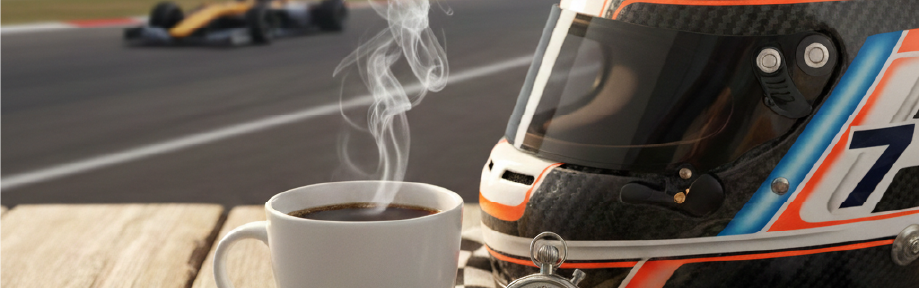
Racing and coffee share a lot of structure: systems, marginal gains, data, people and machines working together. That is why the comparison is useful.
But it only stays useful if you are honest about where it fails.
Coffee is not racing. Not because it is simpler, but because the constraints are different. Some lessons transfer cleanly. Others do not and forcing them across domains is how you end up building the wrong system with a lot of confidence.
Here are five things racing did not teach me about coffee: coffee is agricultural rather than engineered, judged over months rather than weekends, built for delight rather than winning, driven by relationships with real livelihoods at stake, and improved through patience as much as performance.
Nature vs engineered uncertainty
In racing, you can not predict the weather, but you can engineer for it. You design around changing conditions and still aim to deliver performance and reliability. The system is built to absorb uncertainty without falling apart.
Coffee starts in a different place. It is agricultural. Variability is not an edge case; it is the baseline. The harvest changes, moisture changes, processing changes, and a coffee that behaved one way last month may behave differently next month.
You can build systems that adapt, measure, and learn. But you cannot fully control the inputs. Coffee does not allow the same kind of certainty, and pretending otherwise is how you get fragile outcomes.
Feedback loops are slower
Racing gives you immediate truth. Every weekend, the system is tested in public. You learn fast, because you are judged fast. The feedback loop is brutally short, and the ranking has no patience.
Coffee is quieter and slower. People drink your coffee at home; in routines you will never see. They do not grade it on a Sunday evening. They simply decide whether to come back next week, next month, next season.
That changes how you build. You design for continuity, not just moments. You improve over time, without the adrenaline of a weekly verdict. In coffee, trust is a long feedback loop.
The goal is different
Racing is about winning. Even when people talk about learning, the objective function is still clear: rank higher, go faster, beat everyone or at least someone.
Coffee is not about beating anyone. Coffee is about making someone pause, enjoy, and think “Wow.” It’s a different kind of smile. In racing, the body is tense and the mind is on the edge. In coffee, the body is at rest, and the mind is travelling through flavours.
That difference matters. It changes what “better” means. The goal is not maximum intensity, it is pure enjoyment. And that is a very different system to design.
Relationships carry different weight
Racing partnerships can be deep and long-term, but they are still mostly commercial relationships. They matter, but the sport can continue even when they change.
In coffee, relationships at origin are different. They are built over years, not weeks. They affect real livelihoods and real stability for people who do not get to switch careers because the market moved.
That changes the ethical responsibility of the system. Trust is not a nice-to-have. Continuity is not branding. If you care about the ling game in any serious way, relationships stop being a business tactic and become part of the product.
Optimisation and pace
Racing rewards constant pushing. The tempo is relentless. Marginal gains are hunted under pressure, and speed is the default setting.
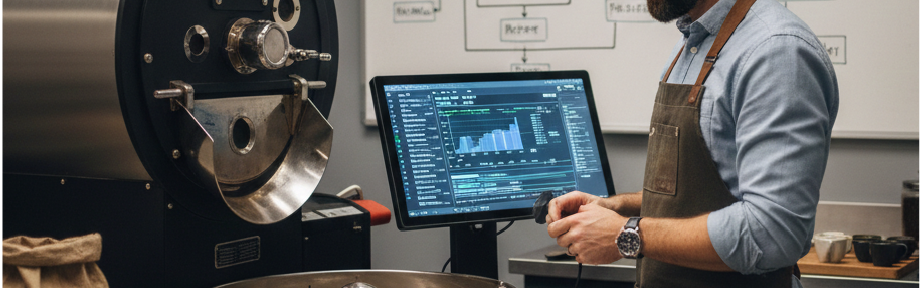
Coffee taught me something else: slow down. Not because ambition disappears, but because flavour rewards patience. Sometimes one extra second in roasting changes everything. Sometimes the most important improvement is not another experiment, but better control, better repeatability, better attention.
Optimisation still exists, but the pace is different. It’s not weekend- driven. It is craft driven. Coffee is teaching me that progress can be quiet, and that not everything needs to be pushed all the time.
Why this matters
Racing taught me how to chase performance with intensity. Coffee is teaching me how to chase quality with patience.
At Heart of Coffee, we borrow what transfers: systems thinking, discipline, curiosity, marginal gains. But we do not import the parts that do not fit. Coffee is agricultural, slow, relationship-driven, and ultimately judged by a simple outcome: does it make someone enjoy their day a little more?
Sometimes the most important lesson from racing is knowing when to stop racing.
And that, surprisingly, is how you build something that lasts.
 English
  French